
Şenol, Habib
Loading...

Profile URL
Name Variants
Şenol, Habib
H.,Şenol
H. Şenol
Habib, Şenol
Senol, Habib
H.,Senol
H. Senol
Habib, Senol
Senol, H.
Şenol,H.
Senol, H
Şenol, Habib
H.,Şenol
H. Şenol
Habib, Şenol
Senol, Habib
H.,Senol
H. Senol
Habib, Senol
Senol, H.
Şenol,H.
Senol, H
Şenol, Habib
Job Title
Doç. Dr.
Email Address
Main Affiliation
Computer Engineering
Computer Engineering
05. Faculty of Engineering and Natural Sciences
01. Kadir Has University
Computer Engineering
05. Faculty of Engineering and Natural Sciences
01. Kadir Has University
Status
Former Staff
Website
ORCID ID
Scopus Author ID
Turkish CoHE Profile ID
Google Scholar ID
WoS Researcher ID
Sustainable Development Goals
 1
1NO POVERTY
0
Research Products
 2
2ZERO HUNGER
0
Research Products
 3
3GOOD HEALTH AND WELL-BEING
1
Research Products
 4
4QUALITY EDUCATION
0
Research Products
 5
5GENDER EQUALITY
0
Research Products
 6
6CLEAN WATER AND SANITATION
0
Research Products
 7
7AFFORDABLE AND CLEAN ENERGY
2
Research Products
 8
8DECENT WORK AND ECONOMIC GROWTH
0
Research Products
 9
9INDUSTRY, INNOVATION AND INFRASTRUCTURE
0
Research Products
 10
10REDUCED INEQUALITIES
0
Research Products
 11
11SUSTAINABLE CITIES AND COMMUNITIES
0
Research Products
 12
12RESPONSIBLE CONSUMPTION AND PRODUCTION
0
Research Products
 13
13CLIMATE ACTION
0
Research Products
 14
14LIFE BELOW WATER
0
Research Products
 15
15LIFE ON LAND
0
Research Products
 16
16PEACE, JUSTICE AND STRONG INSTITUTIONS
0
Research Products
 17
17PARTNERSHIPS FOR THE GOALS
0
Research Products

This researcher does not have a Scopus ID.

This researcher does not have a WoS ID.

Scholarly Output
49
Articles
21
Views / Downloads
280/6034
Supervised MSc Theses
3
Supervised PhD Theses
0
WoS Citation Count
345
Scopus Citation Count
454
Patents
0
Projects
0
WoS Citations per Publication
7.04
Scopus Citations per Publication
9.27
Open Access Source
33
Supervised Theses
3
| Journal | Count |
|---|---|
| IEEE Transactions on Signal Processing | 7 |
| IEEE Transactions on Wireless Communications | 3 |
| IEEE Global Telecommunications Conference (GLOBECOM 04) -- NOV 29-DEC 03, 2004 -- Dallas, TX | 2 |
| Wireless Personal Communications | 2 |
| 2008 IEEE 16th Signal Processing, Communication and Applications Conference, SIU -- 2008 IEEE 16th Signal Processing, Communication and Applications Conference, SIU -- 20 April 2008 through 22 April 2008 -- Aydin -- 74111 | 1 |
Current Page: 1 / 7
Scopus Quartile Distribution
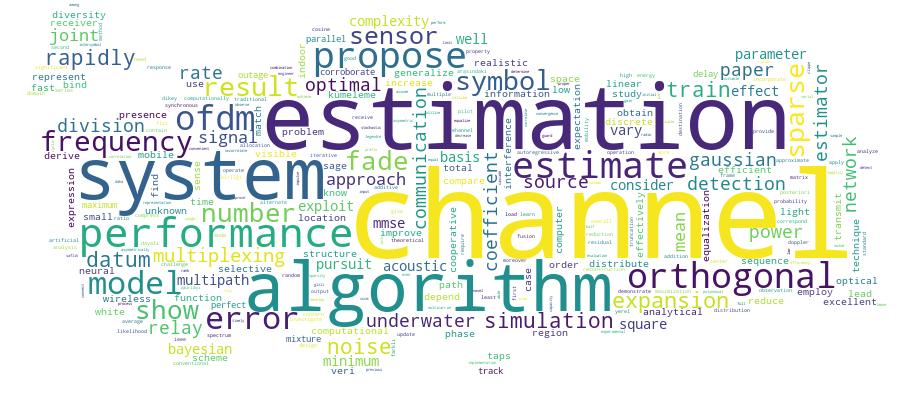
Competency Cloud
49 results
Scholarly Output Search Results
Now showing 1 - 10 of 49
Article Citation - WoS: 14Citation - Scopus: 19Channel Estimation for Tds-Ofdm Systems in Rapidly Time-Varying Mobile Channels(IEEE-Inst Electrical Electronics Engineers Inc, 2018) Başaran, Mehmet; Şenol, Habib; Erküçük, Serhat; Çırpan, Hakan AliThis paper explores the performance of time-domain synchronous orthogonal frequency-division multiplexing (TDS-OFDM) systems operated under rapidly time-varying mobile channels. Since a rapidly time-varying channel contains more unknown channel coefficients than the number of observations, the mobile channel can conveniently be modeled with the discrete Legendre polynomial basis expansion model to reduce the number of unknowns. The linear minimum mean square error (LMMSE) estimate can be exploited for channel estimation on inter-block-interference-free received signal samples owing to transmitting pseudo-noise (PN) sequences. In conventional TDS-OFDM systems, the channel estimation performance is limited due to estimating channel responses only from the beginning part of the channel. Therefore, a new system model named "partitioned TDS-OFDM system" is proposed to improve the system performance by inserting multiple PN sequences to the middle and end parts of the channel as well. In addition to providing the reconstruction error performance, Bayesian Cramer-Rao lower hound is derived analytically. Also, the LMMSE-based symbol detection is employed. To alleviate the negative effects of inter-carrier-interference (ICI) occuring in mobile channels, ICI cancellation is applied to enhance the detection performance. The simulation results demonstrate that the proposed TDS-OFDM system is superior to the conventional system and its corresponding performance is able to approach the achievable lower performance bound.Conference Object Joint Phase Noise Estimation And Source Detection [ortak Faz Gürültüsü Kestirimi ve Kaynak Sezimlemesi](2010) Kaleli, Burç Arslan; Şenol, Habib; Panayırcı, ErdalRapidly time-varying and random disturbing effects on the phase of a signal waveform are known as phase noise. In this paper we consider the problem of joint detection of continuous-valued information source output and estimation of a phase noise by using expectation maximization (EM) algorithm. In order to estimate phase noise initial phase noise values are determined by cubic interpolation that utilizes pilot symbols. Computer simulations are performed for the proposed algorithm and the average mean square error (MSE) - signal to noise ratio (SNR) performance of source detector and phase noise estimator is presented for each iteration of the algorithm. Moreover average MSE - pilot spacing performance curves of phase noise estimator are given for various SNR values. ©2010 IEEE.Conference Object Citation - Scopus: 2Joint Data Detection and Channel Estimation for Ofdm Systems in the Presence of Very High Mobility(IEEE, 2009) Panayırcı, Erdal; Şenol, Habib; Poor, H. VincentThis paper is concerned with the challenging and timely problem of joint channel estimation and data detection for orthogonal frequency division multiplexing (OFDM) systems in the presence of frequency selective and very rapidly time varying channels. The detection and estimation algorithm is based on the space alternating generalized expectation maximization (SAGE) technique which is particularly well-suited to multicarrier signal formats. In order to reduce the computational complexity of the algorithm we apply the cosine orthogonal basis functions to describe the time-varying channel. It is shown that depending on the normalized Doppler frequency only a small number of expansion coefficients is sufficient to approximate the channel perfectly and there is no need to know the correlation function of the input signal. The proposed SAGE joint detection algorithm updates the data sequences in serial and the channel parameters are updated in parallel leading to a receiver structure that also incorporates a partial interference cancelation of the interchannel interference. Computer simulations show that the cosine transformation represents the time-varying channel very effectively and the proposed algorithm has excellent symbol error rate and channel estimation performance even with a very small number of channel expansion coefficients employed in the algorithm resulting in reduction of the computational complexity substantially.Conference Object Effect of the Channel Estimation Error on the Performance of the Source Estimator in a Wireless Sensor Network With Orthogonal Channels(IEEE, 2008) Şenol, Habib; Tepedelenlioğlu, CihanIn this work effect of the channel estimation error on the MSE performance of the source estimator in a wireless sensor network with orthogonal flat fading channels is studied. A two-phase approach was employed where in the first phase the orthogonal fading channel coefficients are estimated and in the second phase channel estimates and sensor observations transmitted to fusion center are used for the source estimation. We consider a sensor network in which the channel estimates are fed-back to the sensors for optimal power allocation which leads to switch off the sensors with bad channels in the second phase. We also show that training power should be at least half of the total power. Our analytical findings are corroborated by simulation results.Conference Object Citation - WoS: 1Citation - Scopus: 4Channel Estimation in Underwater Cooperative Ofdm System With Amplify-And Relaying(IEEE, 2012) Şenol, Habib; Panayırcı, Erdal; Erdoğan, Mustafa; Uysal, MuratThis paper is concerned with a challenging problem of channel estimation for amplify-and-forward cooperative relay based orthogonal frequency division multiplexing (OFDM) systems in the presence of sparse underwater acoustic channels and of the correlative non-Gaussian noise. We exploit the sparse structure of the channel impulse response to improve the performance of the channel estimation algorithm due to the reduced number of taps to be estimated. The resulting novel algorithm initially estimates the overall sparse channel taps from the source to the destination as well as their locations using the matching pursuit (MP) approach. The correlated non-Gaussian effective noise is modeled as a Gaussian mixture. Based on the Gaussian mixture model an efficient and low complexity algorithm is developed based on the combinations of the MP and the space-alternating generalized expectation-maximization (SAGE) technique to improve the estimates of the channel taps and their location as well as the noise distribution parameters in an iterative way. The proposed SAGE algorithm is designed in such a way that by choosing the admissible hidden data properly on which the SAGE algorithm relies a subset of parameters is updated for analytical tractability and the remaining parameters for faster convergence Computer simulations show that underwater acoustic (UWA) channel is estimated very effectively and the proposed algorithm has excellent symbol error rate and channel estimation performance.Article Citation - WoS: 8Citation - Scopus: 8Optimal Training for Residual Self-Interference for Full-Duplex One-Way Relays(IEEE-INST Electrical Electronics Engineers Inc, 2018) Li, Xiaofeng; Tepedelenlioglu, Cihan; Şenol, HabibChannel estimation and optimal training sequence design for full-duplex one-way relays are investigated. We propose a training scheme to estimate the residual self-interference (RSI) channel and the channels between nodes simultaneously. A maximum likelihood estimator is implemented with the Broyden-Fletcher-Goldfarb-Shanno algorithm. In the presence of RSI the overall source-to-destination channel becomes an inter-symbol-interference (ISI) channel. With the help of estimates of the RSI channel the destination is able to cancel the ISI through equalization. We derive and analyze the Cramer-Rao bound (CRB) in closed-form by using the asymptotic properties of Toeplitz matrices. The optimal training sequence is obtained by minimizing the CRB. Extensions for the fundamental one-way relay model to the frequency-selective fading channels and the multiple relays case are also considered. For the former we propose a training scheme to estimate the overall channel and for the latter the CRB and the optimal number of relays are derived when the distance between the source and the destination is fixed. Simulations using LTE parameters corroborate our theoretical results.Article Citation - WoS: 7Citation - Scopus: 10Realistic Channel Estimation of Ieee 802.11af Systems in Tv White Space(Institute of Electrical and Electronics Engineers Inc., 2020) Başaran, Mehmet; Macit, Mustafa Can; Şenol, Habib; Erküçük, SerhatThis work investigates the realistic performance of IEEE 802.11af systems released for the efficient spectrum utilization of TV white space (TVWS). These systems are operated over many contiguous or non-contiguous channels based on the TVWS frequency band availability. Accordingly, we consider realistic channel estimation for TVWS system and analyze the corresponding system performance of linear minimum mean square error (LMMSE) and orthogonal matching pursuit (OMP) algorithms. While LMMSE estimates channel path gains assuming perfectly known tap delay locations, OMP estimates both channel path gains and delays. Owing to the realistic implementation and estimating the full channel state information (CSI) of sparse channels, we mainly assess the OMP performance together with the LMMSE estimation for comparison in terms of channel reconstruction and symbol detection errors. To address the channel estimation performance, Bayesian Cramer-Rao bound is derived theoretically for both perfect and imperfect CSI, and confirmed with the simulations. Simulation results demonstrate that the realistic OMP-based symbol detection performance is found to be only 1-2 dB inferior compared to the near-optimal LMMSE-based estimation with known delays in low and medium signal-to-noise-ratio regions, where communication mainly occurs in practice. In addition, the effects of channel multipath number, channel resolution and operation modes on the system performance are studied for different scenarios. The results of this work are important for the practical implementation of IEEE 802.11af-based systems.Conference Object Citation - WoS: 3Modeling of Visible Light Channels and Performance Analysis of Aco-Ofdm(IEEE, 2015) Yeşilkaya, Anıl; Alsan, Hüseyin Fuat; Miramirkhani, Farshad; Panayırcı, Erdal; Şenol, Habib; Uysal, MuratSpectrum scarcity of traditional radio communication has led communication engineers to find new alternatives. Indoor visible light communication is one alternative to solve this problem since its spectrum is not regulated and it has much wider bandwidth then traditional communication systems. This increased the research done in the field of visible light communications. However a proper indoor channel model is lacking and all previous studies assumes that only additive white Gaussian noise (AWGN) is present. Lack of proper channel model has motivated us to model a realistic indoor visible light channel. After modeling the indoor visible light channel the performance of an asymmetrically clipped optical OFDM (ACO-OFDM) system which is suitable for optical communications is investigated and compared to that of the AWGN optical channels.Article Performance of Cellular Neural Network Based Channel Equalizers(2020) Ozmen, Atilla; Enol, H. S; Tander, B.; Senol, HabibAbstract—In this paper, a popular dynamic neural network structure called Cellular Neural Network (CNN) is employed as a channel equalizer in digital communications. It is shown that, this nonlinear system is capable of suppressing the effect of intersymbol interference (ISI) and the noise at the channel. The architecture is a small-scaled, simple neural network containing only 25 neurons (cells) with a neighborhood of r = 2 , thus including only 51 weight coefficients. Furthermore, a special technique called repetitive codes in equalization process is also applied to the mentioned CNN based system to show that the two-dimensional structure of CNN is capable of processing such signals, where performance improvement is observed. Simula-tions are carried out to compare the proposed structures with minimum mean square error (MMSE) and multilayer perceptron (MLP) based equalizers.Article Citation - Scopus: 13A Low-Complexity Kl Expansion-Based Channel Estimator for Ofdm Systems(2005) Şenol, Habib; Cirpan, Hakan Ali; Panayırcı, ErdalThis paper first proposes a computationally efficient pilot-aided linear minimum mean square error (MMSE) batch channel estimation algorithm for OFDM systems in unknown wireless fading channels. The proposed approach employs a convenient representation of the discrete multipath fading channel based on the Karhunen-Loeve (KL) orthogonal expansion and finds MMSE estimates of the uncorrelated KL series expansion coefficients. Based on such an expansion no matrix inversion is required in the proposed MMSE estimator. Moreover optimal rank reduction is achieved by exploiting the optimal truncation property of the KL expansion resulting in a smaller computational load on the estimation algorithm. The performance of the proposed approach is studied through analytical and experimental results. We then consider the stochastic Cramér-Rao bound and derive the closed-form expression for the random KL coefficients and consequently exploit the performance of the MMSE channel estimator based on the evaluation of minimum Bayesian MSE. We also analyze the effect of a modelling mismatch on the estimator performance. To further reduce the complexity we extend the batch linear MMSE to the sequential linear MMSE estimator. With the fast convergence property and the simple structure the sequential linear MMSE estimator provides an attractive alternative to the implementation of channel estimator.
