
Dağ, Tamer
Loading...

Profile URL
Name Variants
Dağ, Tamer
T.,Dağ
T. Dağ
Tamer, Dağ
Dag, Tamer
T.,Dag
T. Dag
Tamer, Dag
Tamer Dağ
Da?, Tamer
T.,Dağ
T. Dağ
Tamer, Dağ
Dag, Tamer
T.,Dag
T. Dag
Tamer, Dag
Tamer Dağ
Da?, Tamer
Job Title
Doç. Dr.
Email Address
Main Affiliation
Computer Engineering
Status
Former Staff
Website
ORCID ID
Scopus Author ID
Turkish CoHE Profile ID
Google Scholar ID
WoS Researcher ID
Sustainable Development Goals
13
CLIMATE ACTION

1
Research Products
2
ZERO HUNGER

0
Research Products
7
AFFORDABLE AND CLEAN ENERGY

6
Research Products
11
SUSTAINABLE CITIES AND COMMUNITIES

2
Research Products
15
LIFE ON LAND

0
Research Products
14
LIFE BELOW WATER

1
Research Products
8
DECENT WORK AND ECONOMIC GROWTH

0
Research Products
3
GOOD HEALTH AND WELL-BEING

1
Research Products
5
GENDER EQUALITY

0
Research Products
9
INDUSTRY, INNOVATION AND INFRASTRUCTURE

2
Research Products
12
RESPONSIBLE CONSUMPTION AND PRODUCTION

1
Research Products
16
PEACE, JUSTICE AND STRONG INSTITUTIONS

0
Research Products
1
NO POVERTY

0
Research Products
6
CLEAN WATER AND SANITATION

0
Research Products
17
PARTNERSHIPS FOR THE GOALS

0
Research Products
4
QUALITY EDUCATION

0
Research Products
10
REDUCED INEQUALITIES

0
Research Products

This researcher does not have a Scopus ID.

This researcher does not have a WoS ID.

Scholarly Output
47
Articles
12
Views / Downloads
30/0
Supervised MSc Theses
11
Supervised PhD Theses
5
WoS Citation Count
210
Scopus Citation Count
302
WoS h-index
8
Scopus h-index
9
Patents
0
Projects
0
WoS Citations per Publication
4.47
Scopus Citations per Publication
6.43
Open Access Source
31
Supervised Theses
16
| Journal | Count |
|---|---|
| 29th Ieee Conference on Signal Processing and Communications Applications (Siu 2021) | 2 |
| IEEE Access | 2 |
| 2016 IEEE 3rd International Symposium on Telecommunication Technologies (ISTT) | 1 |
| 2016 IEEE International Black Sea Conference on Communications and Networking (BlackSeaCom) | 1 |
| 2019 International Conference on Sustainable Information Engineering and Technology (SIET) | 1 |
Current Page: 1 / 4
Scopus Quartile Distribution
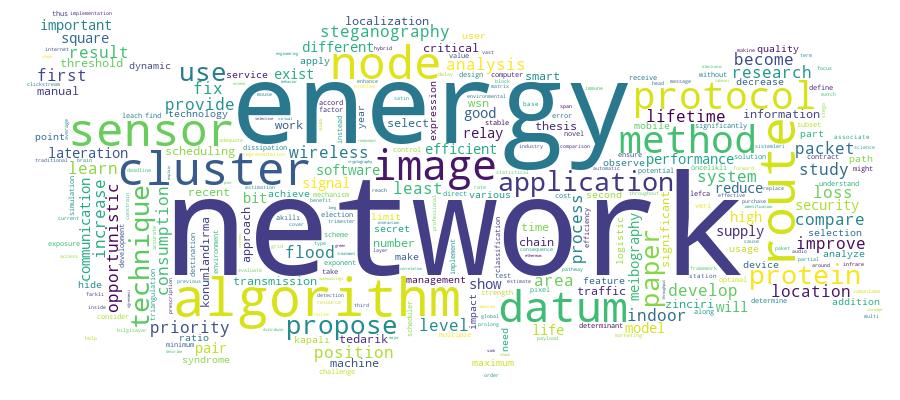
Competency Cloud
47 results
Scholarly Output Search Results
Now showing 1 - 10 of 47
Article Citation - WoS: 13Citation - Scopus: 21Improving Energy-Efficiency of Wsns Through Lefca(Sage Publications Inc, 2016) Cengiz, Korhan; Dağ, TamerWireless sensor networks (WSNs) have become an important part of our lives as they can be used in vast application areas from disaster relief to health care. As a consequence the life span and the energy consumption of a WSN have become a challenging research area. According to the existing studies instead of using direct transmission or multihop routing clustering can significantly reduce the energy consumption of sensor nodes and can prolong the lifetime of a WSN. In this paper we propose a low energy fixed clustering algorithm (LEFCA) for WSNs. With LEFCA the clusters are constructed during the set-up phase. A sensor node which becomes a member of a cluster stays in the same cluster throughout the life span of the network. LEFCA not only improves the lifetime of the network but also decreases the energy dissipation significantly.Conference Object An Energy Efficient Routing Algorithm (x-Centric Routing) for Sensor Networks(INT INST Informatics & Systemics, 2011) Ataç, Göktuğ; Dağ, TamerRecent developments in wireless communications and electronics technologies have enabled the progress in low cost sensor networks. Sensor networks differ from traditional networks in several ways such as the severe energy constraints redundant low-rate date and many-to-one flows that the sensor networks require. One of the major challenges facing the design of a routing protocol for Wireless Sensor Networks (WSNs) is to find the most reliable path between the sources and the sink node by considering the energy awareness as an essential design parameter. This paper introduces a new routing protocol called as X-Centric routing by considering the above parameters. Under the X-Centric routing the decision making mechanism depends on the capacity of the sink node by switching between address-centric routing (AC-Routing) and data-centric routing (DC-Routing). The design tradeoffs between energy and communication overhead savings in these routing algorithms have been considered by considering the advantages and performance issues of each routing algorithm.Article Citation - WoS: 64Citation - Scopus: 89Energy Aware Multi-Hop Routing Protocol for Wsns(IEEE, 2018) Cengiz, Korhan; Dağ, TamerIn this paper we propose an energy-efficient multi-hop routing protocol for wireless sensor networks (WSNs). The nature of sensor nodes with limited batteries and inefficient protocols are the key limiting factors of the sensor network lifetime. We aim to provide for a green routing protocol that can be implemented in a wireless sensor network. Our proposed protocol's most significant achievement is the reduction of the excessive overhead typically seen in most of the routing protocols by employing fixed clustering and reducing the number of cluster head changes. The performance analysis indicates that overhead reduction significantly improves the lifetime as energy consumption in the sensor nodes can be reduced through an energy-efficient protocol. In addition the implementation of the relay nodes allows the transmission of collected cluster data through inter cluster transmissions. As a result the scalability of a wireless sensor network can be increased. The usage of relay nodes also has a positive impact on the energy dissipation in the network.Doctoral Thesis Identification of Critical Proteins Associated With Learning Process for Down Syndrome(Kadir Has Üniversitesi, 2020) Kulan, Handan; Dağ, TamerDS protein profilleri laboratuvarda biyokimyasal teknikler uygulayarak gözlemlenmektedir. Fakat, elde edilen protein listesi uzundur ve listedeki her protein DS ile alakalı değildir. Bu yüzden, DS analizi ve tedavisinde, protein ifade miktarları istatiksel metodlar ve makine öğrenmesi teknikleri uygulayarak analiz edilmektedir. Bu tezde, önceki çalışmalara kıyasla, farklı öndeğerlendirme adımları, özellik seçimi ve sınıflandırma teknikleri, farklı veri setleri için protein altkümeleri belirlenmesi için uygulanmıştır. Bu protein altkümeleri fareleri daha doğru şekilde ayrıştırır. Spesifik DS özelliklerinin kritik yolaklara etki eden bu altkümelerdeki proteinler tek tek analiz edildiğinde, seçilmiş proteinlerin öğrenme ve hafıza, sinyal yolakları, Alzheimer hastalığı, bağışıklık sistemi ve hücre ölümü gibi önemli süreçlerde rol aldığı gözlemlenmiştir. Bu tezde seçilen protein alt kümelerinden DS un farklı semptomlarını anlamak için yararlanılabilinir ve DS tedavisinde etkili ilaçlar geliştirmek için kullanılabilinir. The protein profiles of people with DS are observed by applying biochemical tech niques in laboratory. However, the list of analyzed proteins is long and not all proteins in list are not related to DS. Thus, for the analysis and the treatment of DS, protein expression levels have been analyzed by applying statistical procedures and machine learning techniques. In this thesis, compared to previous works, different preprocessing steps, feature selection and classification techniques are applied to define the subsets of proteins for datasets. These subsets differentiate mice more accurately. When these subsets which affect the critical pathways of specific DS aspects are analyzed, it is monitored that selected proteins have vital roles in the processes, such as apoptosis, learning and memory, signaling pathways, immune sys tem and Alzheimers disease (AD). The subsets of proteins selected in this thesis can be applied to interpret the causes of different symptoms in DS and can be utilized to foster effective drugs for the cure of DS.Master Thesis Location-Allocation Through Machine Learning for E-Commerce Logistic Services(Kadir Has Üniversitesi, 2022) TOPUZ, TAYYİP; Tamer DağCompanies desire to expand their businesses in such a way that there will not be any loss in their revenues. An e-commerce logistics company functions as the distribution and delivery of goods to buyers. To expand the business, opening new branches is a critical decision since determining the location of a branch correctly will not only help an e commerce logistics company to increase its revenue but also improve customer satisfaction. The logistic network, which is based on locations, is the most vital input for their business. For such decisions, data science is becoming an essential tool in recent years. Research shows that demographic information has a considerable impact on consumer behavior in e-commerce. In this thesis, the demand potential is studied by using demographic data and current demand for an e-commerce logistics company. The outcome of this work can be used to determine the location of new branches. Machine learning techniques are being used to decide the location of a new branch with the help of delivery demand potential prediction.Article Non-Preemptive Priority Scheduler With Multiple Thresholds for Network Routers(Pamukkale Univ, 2018) Dağ, TamerThe vast variety of applications available and being developed for computer networks have different quality of service requirements. One of the most significant ways to satisfy the needs of the applications is the packet scheduling algorithms employed by the network routers. By allocating router resources to the applications packet schedulers try to improve the quality of service needs of the applications. Thus the delays can be reduced or the reliability of the applications can be increased by reducing packet losses. Priority schedulers are able reduce the delay and losses for high priority applications. On the other hand for low priority applications they introduce the starvation problem. Low priority application packets can face excessive delays and losses. In this paper a non-preemptive priority scheduler with multiple thresholds (PRMT) is proposed. The PRMT scheduler needs only a single queue with predefined threshold levels for different priority applications. The PRMT scheduler eliminates the starvation problem of low priority applications without a significant impact on the high priority applications.Conference Object Citation - WoS: 1Citation - Scopus: 4An Improved Hybrid Stable Election Routing Protocol for Large Scale Wsns(IEEE, 2021) Hamad, Lana I. S.; Dag, Tamer; Gucluoglu, TansalIn the recent years, wireless sensor networks have become prevalent in a diverse range of applications. Throughout the massive usage of wireless sensor networks, some applications require sensing and/or data collection over large areas of interest. In such applications maximizing the network lifetime thus an efficient energy consumption becomes very critical. In this paper, an improved routing protocol for large-scale WSNs based on the well-known Stable Election Protocol is proposed. With this work, the existing Stable Election Protocol is enhanced by introducing low-cost relay nodes that help to increase the lifetime and the throughput of the network. The communication between the sensor nodes and the base station is established through cluster heads and relay nodes. With the relay nodes, the simulation results show an increase in the network stability period by 34.5% and the throughput by 23%.Conference Object Max-Pivot Routing for Opportunistic Networks(2013) Dağ, TamerOpportunistic networks are challenging types of networks where network connections are imminent. Network topologies are dynamic and can rapidly change. A path between a source node and a destination node may or may not exist the network can be disconnected. This type of behavior observed under opportunistic networks makes classical networking solutions impractical. Thus traditional routing algorithms are not suitable for such networks and will not be useful. Although flooding might be seen as the best solution to reach a destination under opportunistic networks flooding solutions' extensive usage of network resources is an extreme overhead. In this paper max- pivot routing for opportunistic networks is proposed and described. With max-pivot routing it is observed that the induced network traffic is significantly reduced while still achieving the benefits of a flooding based routing. The performance comparisons of max-pivot routing and flooding based routing methods show that max-pivot routing can be a successful routing method for opportunistic networks.Article Citation - WoS: 8Citation - Scopus: 15Improving Supply Chain Management Processes Using Smart Contracts in the Ethereum Network Written in Solidity(Mdpi, 2024) Yigit, Eren; Dag, TamerThis paper investigates the potential of integrating supply chain management with blockchain technology, specifically by implementing smart contracts on the Ethereum network using Solidity. The paper explores supply chain management concepts, blockchain, distributed ledger technology, and smart contracts in the context of their integration into supply chains to increase traceability, transparency, and accountability with faster processing times. After investigating these technologies' applications and potential use cases, a framework for smart contract implementation for supply chain management is constructed. Potential data models and functions of a smart contract implementation improving supply chain management processes are discussed. After constructing a framework, the effects of the proposed system on supply chain processes are explained. The proposed framework increases the reliability of the supply chain history due to the usage of DLT (distributed ledger technology). It utilizes smart contracts to increase the manageability and traceability of the supply chain. The proposed framework also eliminates the SPoF (Single Point of Failure) vulnerabilities and external alteration of the transactional data. However, due to the ever-changing and variable nature of the supply chains, the proposed architecture might not be a one-size-fits-all solution, and tailor-made solutions might be necessary for different supply chain management implementations.Conference Object Importance of Regional Differences in Brain Throughout Aging for Down Syndrome(Association for Computing Machinery, 2018) Kulan, Handan; Dağ, TamerDown syndrome (DS) which affects approximately one in 700 live births is caused by an extra copy of the long arm of human chromosome 21 (HSA21). Statistical analysis has been done for understanding the protein expression profiles based on age and sex differences in DS. In addition there are ongoing research efforts for comprehending expression patterns based on different brain regions. However little is known about the mechanisms of expression differences in brain regions throughout aging. Insights into these mechanisms are required to understand the susceptibility of distinct brain regions to neuronal insults with aging. Dissection of this selective vulnerability will be critical to our understanding of DS. By extracting information from the critical proteins which take part in the mechanism of the molecular pathways the diagnosis of DS can become easier. Also understanding the molecular pathways can contribute to develop effective drugs for the treatment of DS. In this work forward feature selection technique is applied for determining the protein subsets for old and young mice datasets which consist of the expression profiles across different brain regions. When these subsets are analyzed it is observed that selected proteins play important roles in the processes such as mTOR signaling pathway AD MAPK signaling pathway and apoptosis. We believe that the subsets of protein selected in our work can be utilized to understand the process of DS and can be used to develop age-related effective drugs.
