Yenidoğan Dağ, Işıl

Loading...
Profile Picture
Name Variants
Yenidoğan Dağ, Işıl
I.,Yenidoğan Dağ
I. Yenidoğan Dağ
Işıl, Yenidoğan Dağ
Yenidogan Dag, Isil
I.,Yenidogan Dag
I. Yenidogan Dag
Isil, Yenidogan Dag
Yenidoğan, Işıl
Job Title
Öğr. Gör.
Email Address
Main Affiliation
Management Information Systems
Status
Former Staff
Website
ORCID ID
Scopus Author ID
Turkish CoHE Profile ID
Google Scholar ID
WoS Researcher ID

Sustainable Development Goals

SDG data is not available
This researcher does not have a Scopus ID.
This researcher does not have a WoS ID.
Scholarly Output

4

Articles

1

Views / Downloads

7/0

Supervised MSc Theses

0

Supervised PhD Theses

0

WoS Citation Count

93

Scopus Citation Count

170

WoS h-index

2

Scopus h-index

3

Patents

0

Projects

0

WoS Citations per Publication

23.25

Scopus Citations per Publication

42.50

Open Access Source

2

Supervised Theses

0

JournalCount
2018 3rd International Conference on Computer Science and Engineering (UBMK)2
2012 International Symposium on Innovations in Intelligent Systems and Applications1
Fırat Üniversitesi Mühendislik Bilimleri Dergisi1
Current Page: 1 / 1

Scopus Quartile Distribution

Quartile distribution chart data is not available

Competency Cloud

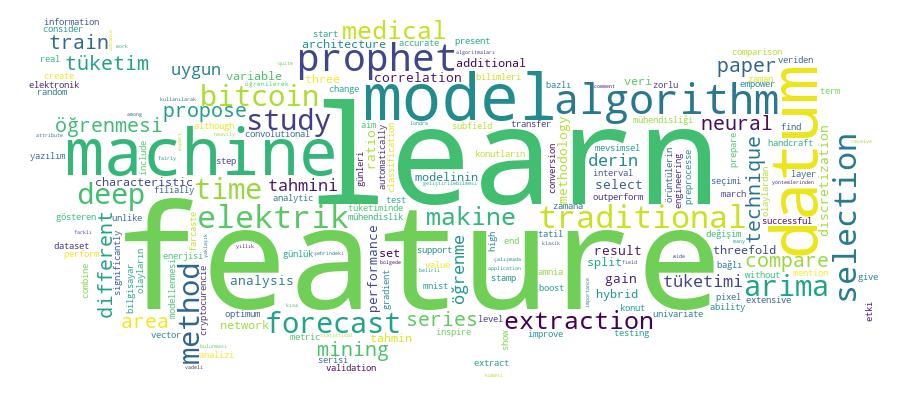
GCRIS Competency Cloud

Scholarly Output Search Results

Now showing 1 - 4 of 4
  • Conference Object
    Citation - WoS: 39
    Citation - Scopus: 56
    Feature Extraction Based on Deep Learning for Some Traditional Machine Learning Methods
    (Institute of Electrical and Electronics Engineers Inc., 2018) Çayır, Aykut; Yenidoğan, Işıl; Dağ, Hasan
    Deep learning is a subfield of machine learning and deep neural architectures can extract high level features automatically without handcraft feature engineering unlike traditional machine learning algorithms. In this paper, we propose a method, which combines feature extraction layers of a convolutional neural network with traditional machine learning algorithms, such as, support vector machine, gradient boosting machines, and random forest. All of the proposed hybrid models and the above mentioned machine learning algorithms are trained on three different datasets: MNIST, Fashion-MNIST, and CIFAR-10. Results show that the proposed hybrid models are more successful than traditional models while they are being trained from raw pixel values. In this study, we empower traditional machine learning algorithms for classification using feature extraction ability of deep neural network architectures and we are inspired by transfer learning methodology to this.
  • Conference Object
    Citation - WoS: 54
    Citation - Scopus: 97
    Bitcoin Forecasting Using Arima and Prophet
    (IEEE, 2018) Yenidoğan, Işıl; Çayır, Aykut; Kozan, Ozan; Dağ, Tugce; Arslan, Çiğdem
    This paper presents all studies methodology and results about Bitcoin forecasting with PROPHET and ARIMA methods using R analytics platform. To find the most accurate forecast model the performance metrics of PROPHET and AMNIA methods are compared on the same dataset. The dataset selected 16r this study starts from May 2016 and ends in March 2018 which is the interval that Bitcoin values changing significantly against the other currencies. Data is prepared for time series analysis by performing data preprocessing steps such as time stamp conversion and feature selection. Although the time series analysis has a univariate characteristics it is aimed to include some additional variables to each model to improve the forecasting accuracy. Those additional variables are selected based on different correlation studies between cryptocurrencies and real currencies. The model selection for both ARIMA and PROPHET is done by using threefold splitting technique considering the time series characteristics of the dataset. The threefold splitting technique gave the optimum ratios for training validation and test sets. Filially two different models are created and compared in terms of performance metrics. Based on the extensive testing we see that PROPHET outperforms ARIMA by 0.94 to 0.68 in R-2 values.
  • Conference Object
    Citation - Scopus: 17
    Comparison of Feature Selection Algorithms for Medical Data
    (IEEE, 2012) Dağ, Hasan; Sayın, Kamran Emre; Yenidoğan, Işıl; Albayrak, Songül Varli; Acar, Can
    Data mining application areas widen day by day. Among those areas medical area has been receiving quite a big attention. However working with very large data sets with many attributes is hard. Experts in this field use heavily advanced statistical analysis. The use of data mining techniques is fairly new. This paper compares three feature selection algorithms on medical data sets and comments on the importance of discretization of attributes. © 2012 IEEE.
  • Article
    Konutların Günlük Elektrik Güç Tüketimi Tahmini İçin Uygun Model Seçimi
    (Fırat Üniv. Fen Bilimleri Enst., 2018) Çayır, Aykut; Dağ, Hasan; Yenidoğan, Işıl
    Zamana bağlı değişim gösteren olayların modellenmesi zorlu bir veri analizi problemidir. Bu olaylardan biri olan elektrik güç tüketiminde ise veriden mevsimsel etki ve tatil günleri gibi örüntülerin öğrenilerek bir tüketim tahmin modelinin geliştirilebilmesi için klasik makine öğrenmesi ve derin öğrenme yöntemlerinden yararlanılmaktadır. Bu çalışmada, İngiltere’nin Londra şehrindeki belirli bir bölgede 30 farklı eve ait yaklaşık 3 yıllık elektrik güç tüketimi veri kümesi kullanılarak uygun bir kısa vadeli tüketim tahmin modelinin makine öğrenmesi algoritmaları ile bulunması amaçlanmıştır.